Jewelry Use, Care & Storage
We'd like to tell you about the proper use, care, maintenance and storage of our jewelry, so that it lasts as long as possible over time. Each piece we make may consist of various materials (such as stones, cord, elastic, metal elements), so it's good to know how each material reacts to the conditions in which it is worn and stored.
Depending on the materials one of our jewelry pieces is made of, improper use may affect it. As general advice, it's best that no jewelry comes into contact with water (or sweat), is worn during sports, is left exposed to high temperatures (e.g. inside a car in summer) or humidity, or comes into contact with antiseptics, perfumes or deodorants. You need to take care of your jewelry if you want it to last over time. Some of our jewelry is not affected by most of the conditions above; however, it's good to follow these rules for all pieces. Below we give more specific information depending on the materials:
- Jewelry without metal elements
These pieces (e.g. elastic bracelets without metal elements) can come into contact with water. Even so, salt water, sweat or chemicals contained in deodorants, perfumes and shampoos may, over time, speed up the wear of their elastic, fabric or plastic parts. Stones are highly resistant to water and chemicals, but in some cases high temperatures may crack them. Stones and minerals are also slightly fragile and will not withstand intense sports activity in which they hit an object. They can be worn in all conditions, but not continuously in harsh conditions. They can be stored without restrictions. Finally, note that stones fixed to a piece of jewelry with glue are resistant to water and chemicals, but the glue is not. Ask us if you are not sure whether glue has been used on your piece, so you know how to treat it. - Stainless steel jewelry
Stainless steel is one of the most durable metals that can be used (it differs from silver in its shine, which is less intense). However, no type of stainless steel is “indestructible”, as it too can be affected by years of use in harsh conditions (salt, acidic sweat, chemicals, etc.). It can be worn in all conditions, but not continuously in harsh conditions. It can be stored without restrictions, and care is simple: clean it with a damp soft cloth and then with a dry cloth. - Silver-plated & Silver jewelry
Silver is a beautiful metal widely used in jewelry making, but it tarnishes easily! Silver or silver-plated jewelry (a metal alloy with a silver coating) must be stored airtight, as it tarnishes even when exposed to air. It's best to avoid wearing it in water or in conditions that cause sweating. Avoid spraying perfume, deodorant or any chemical on it (other than silver cleaners). There are special cleaners for silver and silver-plated jewelry that we recommend using to clean them. With proper storage and use, these pieces will last a long time before they need their first cleaning. Silver-plated jewelry needs more care and can withstand only a few cleanings, as its coating may eventually wear off. For this reason, avoid friction and knocks against other surfaces. For tips on caring for silver and silver-plated jewelry, click here. - Gold-plated jewelry
Gold-plated jewelry has a metal alloy base, and the gold is a thin coating over the alloy. We often refer to the karats of the plating, which should not be confused with the karats of solid gold jewelry. For example, 14-karat plating means that the thin coating over the base metal alloy is made of 14-karat gold, not that the piece as a whole is made of 14-karat gold. Gold plating is vulnerable to exposure to water, sweat, chemicals, etc., so it's best to avoid regularly wearing these pieces in water (bathing, the sea, etc.), in conditions that cause sweating, during sports, and so on. Gold-plated jewelry must also be protected from friction and impact, as the gold plating may wear off in places, exposing the underlying metal, which will oxidize, and the oxidation may then spread to the whole piece. It must be stored airtight when you're not wearing it. It's worth noting that gold-plated jewelry with a stainless steel base is more durable, as it does not oxidize if the plating starts to wear off (although the color of the piece changes in those spots, from gold to metallic silver). - Jewelry made of/with other metal elements
Other metal elements, such as bronze, may be sensitive to humidity, sweat or contact with water. Avoid regularly wearing them in water, in the sea or during sports. It's natural for these metal elements to develop a natural patina over time, which is the result of oxidation of the metal's surface. - Other elements in jewelry
Materials such as elastic, cords, threads and wires that may be part of a bracelet or necklace are resistant to water or washing, but not to prolonged mistreatment. For example, if you often go to the gym or the pool, or if your job involves intense physical activity, we recommend taking off your jewelry before starting any of these activities. Wood can also deteriorate with prolonged exposure to moisture or chemicals.
3 Useful Tips:
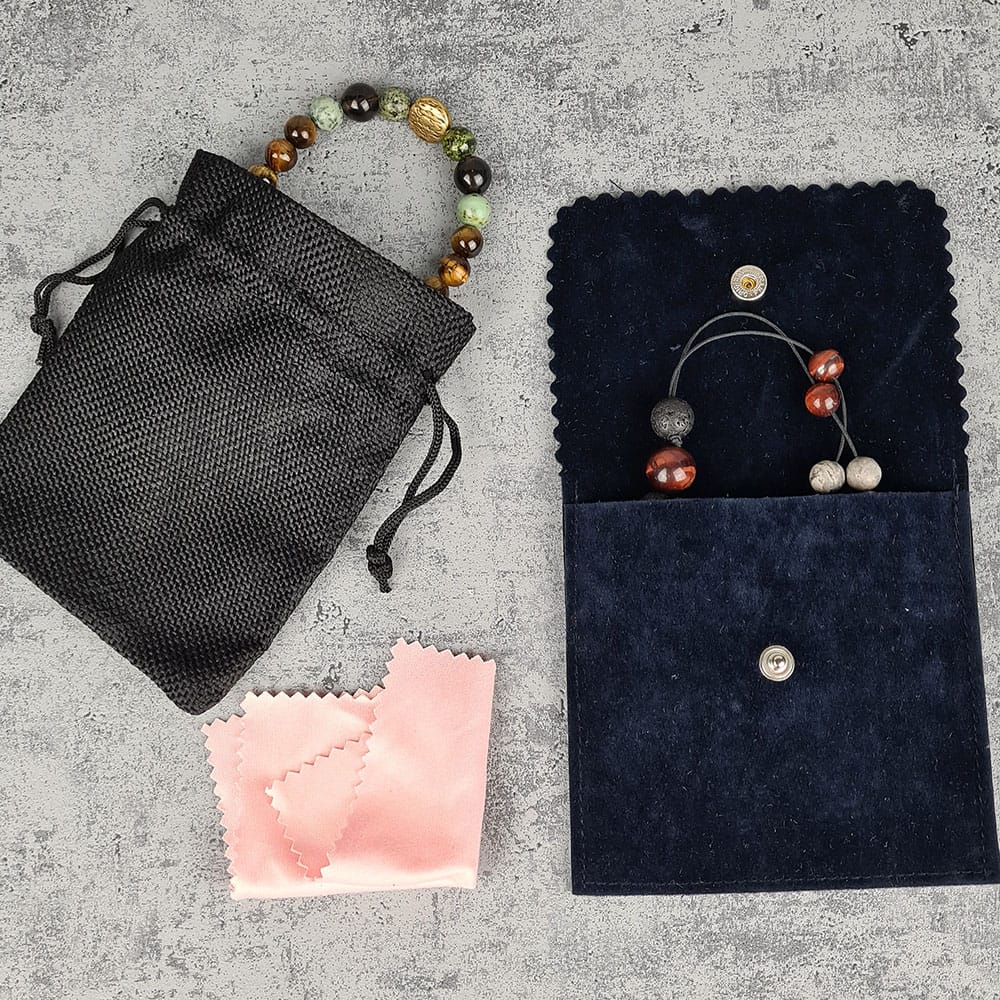
- Store your jewelry separately and closed (to avoid friction and contact with air).
- Put them on last when getting ready, after you have applied deodorant and perfume.
- Take them off when you bathe, do housework or exercise.